Tessa Kovac
Ask for records before you travel or send a deposit. The best questions identify the exact car and show whether the seller can support the story with paper.
The FTC recommends a vehicle-history report and an independent inspection when you buy a used car. Use both. They answer different questions.
Start with the VIN. Everything else follows it.
Contents 9 sections
Ask for the identity record
Request the complete VIN, model year, trim, mileage, title image, and current location. Ask whether the seller owns the car, sells it for another party, or has a lien to clear.
Then ask for the equipment that changes the comparison. For an exotic car, that can include gearbox, body style, brake type, factory options, wheels, and modifications. A listing title rarely gives the whole specification.
Use the exact VIN for a NHTSA recall search and a title-history report. NHTSA says its VIN results may not show completed recalls or some newly announced recalls. Ask the seller or brand dealer for completion evidence too.
NHTSA's VIN lookup may omit safety recalls more than 15 years old unless the manufacturer offers more coverage. It also omits international vehicles and some small manufacturers. Confirm the VIN with the manufacturer or authorized dealer. Follow any interim safety instructions, including a do-not-drive warning, before arranging transport or a test drive.
Ask for the service file
Use plain questions that invite documents:
| Ask | Paper to request |
|---|---|
| What routine service has the car had? | Dated invoices with mileage and work listed |
| What major repairs have been completed? | Diagnosis, invoice, and follow-up record |
| What is due next? | The correct model-year schedule and recent invoices |
| Has the car been stored for long periods? | Related service, battery, tire, and fluid records |
"Full service history" is a seller phrase. The invoices define it.
The answer can be incomplete without proving neglect. Mark missing work as unconfirmed and give the record gap to the inspection shop.
Ask about bodywork and modifications
Ask whether the car has had collision repairs, paintwork, replacement panels, track use, tuning, exhaust changes, suspension changes, or other modifications. Request invoices, photographs, installer details, software records, and alignment reports when relevant.
Modified does not tell you the quality of the work. Stock does not prove the past use. The car needs a specialist who can compare the disclosed setup with what is fitted now.
The National Motor Vehicle Title Information System can show certain title, brand, odometer, total-loss, and salvage data. It does not replace physical inspection or repair records.
Ask for inspection access
Book a pre-purchase inspection, or PPI, with a shop you choose. Ask the seller whether the car can arrive cold, go on a lift, receive a diagnostic scan where appropriate, and have a safe road test.
Ask the shop to report its limits and return photographs, measured wear, diagnostic findings, and estimates for identified work. The FTC advises buyers to choose an independent mechanic rather than rely only on the seller's account of the car.
If reasonable inspection access is refused, you have your answer. Walk.
Turn the answers into an inspection brief
Use the seller's answers to give the shop a focused job. If the car has changed suspension parts, send the installer invoice and ask the inspector to check the fitted parts, alignment record, and present condition. If the seller describes a repaired fault, send the diagnosis and follow-up invoice. Ask the shop whether the current test can confirm the claimed result.
Separate three types of answer in your notes. “Seller says” is a claim. A dated invoice shows that a shop billed named work. An inspection reports what a specialist observed on one day. These can agree, disagree, or leave a gap. Keep each under its own label so the listing story does not turn into a verified fact through repetition.
Ask the shop to say which requested checks it could not complete. A safe road test may be unavailable, or a panel may hide a repair. Put those limits in the report. Decide whether another test, a written estimate, or a different car is the next move.
A seller exchange before a trip
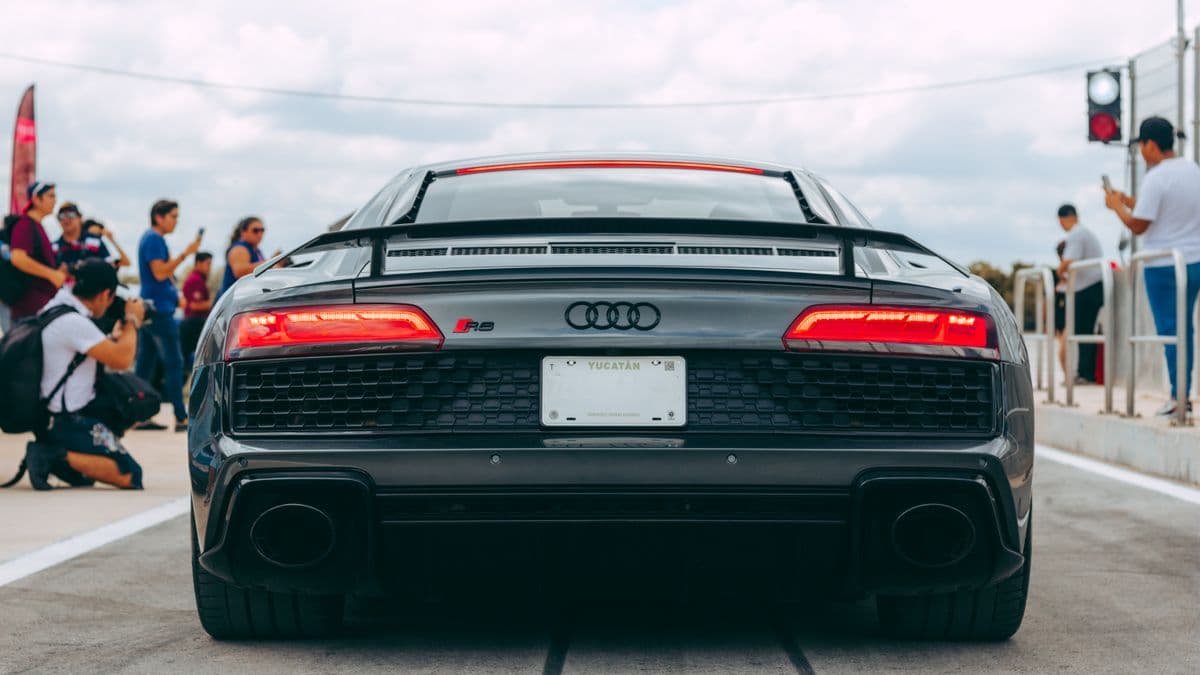
This hypothetical exchange shows why the order of questions matters. A seller advertises a low-mileage R8 and says it needs nothing. You ask for the VIN, title image, and service invoices. The seller sends the VIN and a recent oil-service receipt but no older work. You can run the VIN checks now. You cannot call the missing years “full service history.”
Ask which shop held the earlier records and whether the seller can get copies. Ask when the tires and brakes were last checked, and whether the car has its original gearbox setup. If the seller sends records, add them to a dated timeline. If no records exist, ask the inspector to identify visible due work and the limits of what can be confirmed.
Suppose the seller allows an independent inspection but wants a deposit before the appointment. Put the inspection condition and refund terms on paper first. If the seller refuses inspection access or the VIN later changes, walk. The question list has done its job even when you never travel to see the car.
Sort the reply before a call
After the first message, put each answer in one of three groups: document received, answer promised, or answer refused. A promise is useful for planning, but it does not close the question. Set a date to request the missing item again before booking travel. If the seller says the shop has records, ask the seller to obtain them or authorize the shop to share them.
Use the phone call for questions that documents raised. If an invoice lists a body repair, ask what happened and which panels were involved. If a title report has a mileage gap, ask for the service records around it. Save a short written recap and invite the seller to correct it. This preserves the answer without treating a call as proof.
When a car has aftermarket parts, ask which parts are fitted now and which original parts come with it. Ask who installed them, whether the software was changed, and whether the shop can inspect the current setup. A seller may know only part of that history. Record what is unknown instead of turning a vague “stock now” into a factory claim.
The seller's willingness to answer has value, but it is not a substitute for condition evidence. A friendly reply can accompany a weak file. A brief reply can still include complete invoices. Judge the documents and inspection access first. Use the conversation to find the next record or test, not to decide that the car is sound.
Send one clear message
I am considering [VIN]. Please send the VIN, title information, dated service invoices, repair and modification records, and any history-report information you have. I will arrange an independent inspection before I proceed. Please confirm the car can be inspected cold, on a lift, and on a safe road test where conditions permit.
After you have the documents and inspection result, run a free Value Check. Keep the estimate and the mechanical findings in separate columns. The R8 market page and R8 buyer guide show how model-specific questions change the file.
Deal, Check, or Walk
| Call | Evidence | Next move |
|---|---|---|
| Deal | VIN and title checks resolved; independent inspection complete; required work priced | Compare the full purchase cost and confirm transfer terms. |
| Check | A record, repair, or modification needs more proof | Ask for the document or specialist finding before a deposit. |
| Walk | The seller refuses the VIN or reasonable inspection access | Leave the listing. |
Exotic Index provides informational buyer-intelligence estimates. They are not appraisals, investment or financial advice, or offers to buy or sell a car.
Do not rely on Exotic Index alone. Always review title, service history, accident history, ownership records, seller documentation, and obtain an independent pre-purchase inspection before buying.
Sources (3)
Sources checked
Sources were checked on September 21, 2026. NHTSA lookup limits were rechecked on September 22, 2026.