Tessa Kovac
Rare car options can justify an extra asking amount when comparable completed sales support it. Rarity alone leaves that amount unproven. First confirm the equipment on the exact car. Then check the claimed production count and compare sales with and without the option. Keep any extra you choose to pay for personal preference separate from the sale evidence.
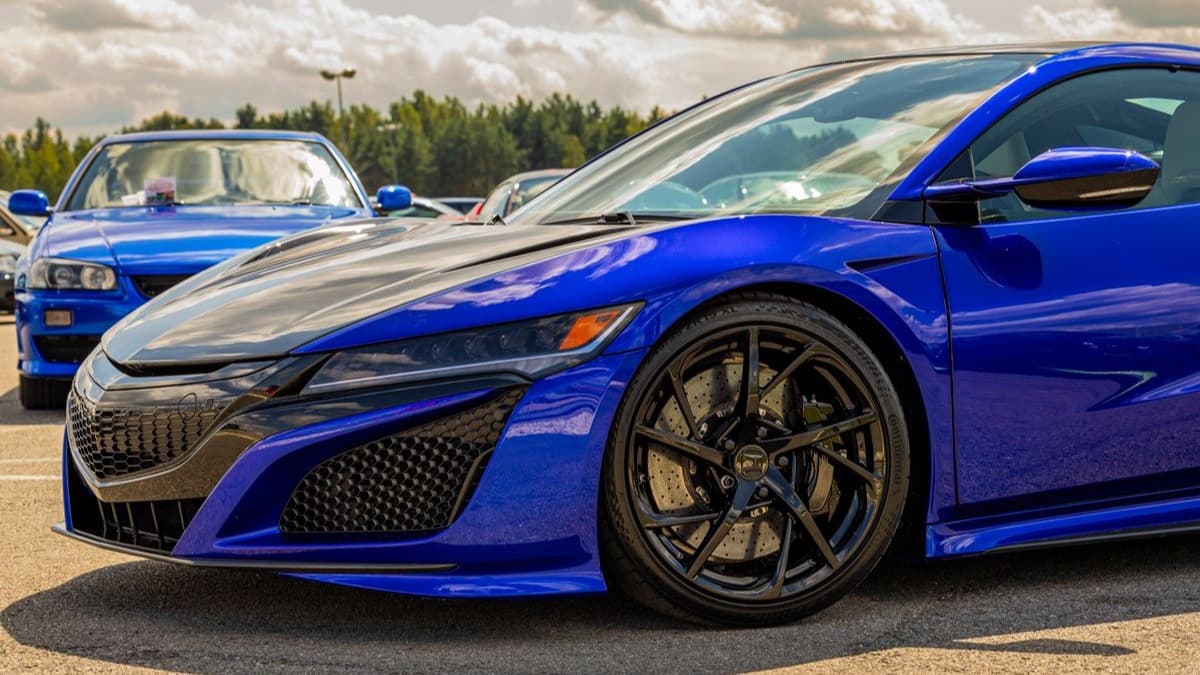
Use this method for a U.S. Audi R8 V10, Nissan GT-R R35, or second-generation Acura NSX. It gives you questions to settle before accepting an option premium, meaning the extra price attributed to that equipment. It supplies no measured premium for these cars. The cover is illustrative; we did not inspect that NSX.
Exotic Index provides informational buyer estimates. This article is not an appraisal, investment or financial advice, or an offer to buy or sell a vehicle.
Contents 7 sections
Prove what the car has
Ask the seller for the original window sticker or a factory equipment record tied to the vehicle identification number, or VIN. Match that number to the car and its documents. Record the exact option name, package, model year, and original market.
NHTSA's VIN decoder identifies information encoded in the VIN from manufacturer-reported data. Use it as an identity cross-check. Refer unresolved details to the manufacturer. Keep the factory equipment record in the file before treating an option claim as confirmed.
Then have the inspector confirm what remains fitted. A factory record describes the original specification. Your purchase concerns the car now. Ask about replacement parts, later additions, repainting, and any differences from that record.
For a rare color, request the factory paint name and code. Ask whether the visible finish is original paint, a repaint, or a wrap. Have the inspector assess the finish. A photograph cannot settle those questions.
A seller's description such as “full carbon” needs an itemized answer. Which parts came from the factory? Which came later? Which belong to a package? Leave unresolved items marked unknown.
Ask what the rarity count covers
Have the seller send the source behind “one of” or “rare specification.” A count needs a defined group: model year, market, version, and equipment combination. It also needs a date and a clear basis.
A worldwide production count answers a different question from a U.S. count for one model year. An owner's registry may count only submitted cars. Record that limit if the registry explains it. If the source gives no coverage, keep the production count unknown.
Confirm whether the claim concerns one option or an entire combination. A count for one paint-and-interior pairing does not establish how many cars have the brake package. Nor does either count show what buyers paid.
Keep two lines in your notes: “rarity evidence” and “sale evidence.” A supported count can complete the first line while the second remains empty.
Separate sticker cost from used value
Acura's 2019 NSX press kit, dated October 10, 2018, lists premium paint at $700, including Thermal Orange Pearl. It lists the gloss carbon-fiber roof at $6,000. Those historical new-car option list prices total $6,700: $700 + $6,000.
That total answers the original list-price question. It establishes neither the number built with both options nor the extra amount a used buyer paid. The same press kit lists the Technology Package as standard for 2019 and describes it as previously optional. Check the exact year and market before treating equipment as an extra.
Keep original list cost, current asking price, and completed-sale price in separate fields. Avoid adding the old package cost to a used-car comparison that already includes similarly equipped cars. That would count the equipment twice.
Our NSX Type S comparison covers the version check. The NSX brake check covers the inspection request. Neither supplies a measured resale premium for an option.
Build a comparison that tests the option
Start with completed sales of the same generation, version, body style, gearbox, and market. Match model year, mileage, condition, title history, and service evidence as closely as the records allow.
Split those sales by confirmed equipment. Mark an undocumented option as unknown. An advertisement's omission is not proof that a car lacked it.
For each sale, record:
- Source, sale date, and whether the result confirms a completed sale.
- Exact version and equipment evidence.
- Mileage, condition, title status, and disclosed changes.
- Price basis: winning auction bid, price including buyer fees, or another clearly defined sold amount.
- Differences that prevent a fair comparison.
Compare the groups only after that check. A higher sale price on a lower-mileage car cannot isolate the option's contribution. Different sale dates or undocumented condition can also leave the cause unresolved.
Report the number of comparable sales with any price range. With few matched sales, keep the range broad and the option effect uncertain. If no usable comparison exists, say “premium unknown.” Active listings show seller expectations and belong in a separate asking-price file.
The price-chart guide explains the wider sales check. This narrower task asks whether the evidence supports paying extra for one feature. We have not performed a matched-sales study here.
Run one NSX claim through it
Consider a hypothetical U.S. 2019 NSX with Thermal Orange Pearl paint and a gloss carbon-fiber roof. Its seller attributes an extra $8,000 in asking price to that combination. This invented asking amount has no completed-sale evidence behind it. No actual listing, inspection, or sale is represented.
Each row below shows a possible response to a different evidence request.
| Evidence received | What it settles | What remains open |
|---|---|---|
| Factory record matches the car's VIN and names both options | Original equipment specification | Whether every relevant part remains fitted and its condition |
| Seller sends only the historical option list | The option existed and had a new-car list cost | Whether this car was ordered with it |
| Seller calls the color rare without a production source | The seller's claim is recorded | Factory finish, count, and count coverage |
| Sales file mixes 2019 NSXs with later Type S cars | Some NSX sale results are available | A matched comparison that tests these options |
The next action follows the missing evidence. If you received only the option list, request the factory record. If that record is confirmed, have the specialist check fitted equipment. Rebuild a mixed sale group around the same version and model year. Neither the $6,700 historical option total nor the invented $8,000 asking premium establishes a resale allowance.
Keep condition in the price
Verified equipment still needs an independent pre-purchase inspection, or PPI, by a shop you choose. The FTC's used-car advice recommends a written inspection report with repair estimates and the car's VIN.
Give the shop the equipment record and ask it to identify relevant findings. A completed report supplies condition evidence. A booked appointment or inspection request supplies only the plan.
Set your walk price using comparable completed sales, known work, and the full purchase cost. If you value a particular color or feature personally, choose a separate spending limit for that preference. Keep that choice out of any claimed market premium.
Use the pilot market pages to find the relevant model group. Check the displayed range and comparable count wherever an estimate is available. A broad group can help you start; the exact equipment comparison still needs its own evidence.
Deal, Check, or Walk on the premium
- Deal: The factory record and fitted equipment agree. Inspection findings are priced in. Matched sales support the asking amount, or your separate preference limit explains the extra.
- Check: The option, production count, condition, or sale comparison remains unresolved. Pause the deposit and request the specific missing record.
- Walk: The seller blocks an independent inspection or leaves a material VIN or equipment conflict unresolved. Decline an asking amount above your walk price.
Keep the equipment proof and sale file beside the listing. Then run a free Value Check before you send a deposit.
Sources (3)
Sources checked
- NHTSA VIN Decoder: manufacturer-reported VIN information and questions to refer to the manufacturer.
- Acura 2019 NSX press kit, October 10, 2018: historical U.S. standard equipment, option names and new-car list prices.
- FTC buying a used car from a dealer: independent inspection and a written report with repair estimates.
Sources checked October 11, 2026. The comparison sequence is Exotic Index's proposed buyer method. The sources establish no option premium or color production count.