Tessa Kovac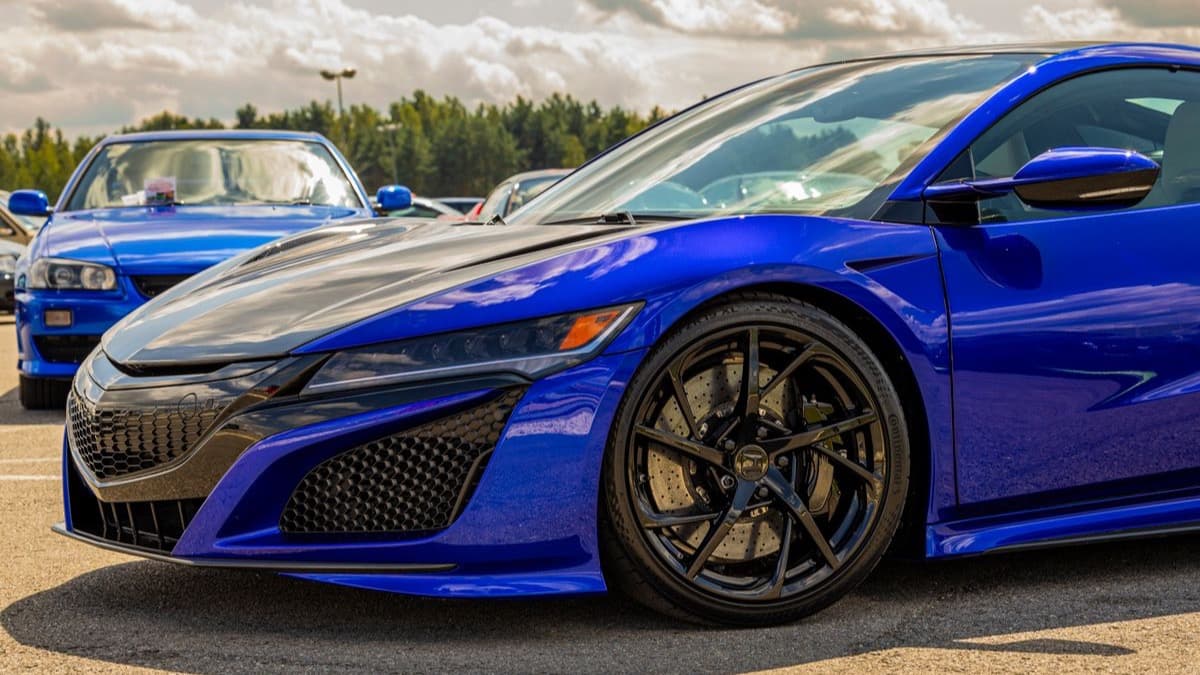
To check a second-generation Acura NSX for recalls, get the 17-character vehicle identification number (VIN) from the car. Search it through NHTSA's recall tool and Acura's recall search. Then ask an Acura dealer which campaigns apply to that VIN and for records of repairs already completed. Settle any open safety item and follow Acura's current interim instructions before a test drive or deposit.
This check covers U.S.-market NSX model years 2017 through 2022, including the 2022 Type S. A model-year recall list tells you what could apply. Only a check of the exact VIN can answer which campaigns Acura identifies for the car in front of you. The photo shows an illustrative NSX, not a vehicle checked for this article.
Exotic Index provides informational buyer estimates. This guide is not an appraisal, investment or financial advice, or an offer to buy or sell a vehicle.
Contents 7 sections
Match the VIN to the car
Ask the seller for a clear photo of the VIN visible through the lower left of the windshield. NHTSA identifies that location and notes that registration and insurance records may also show the number. Compare it with the VIN on the title, listing, service invoices, and the vehicle when you see it. A copied number in an advertisement does not confirm that the documents belong to this NSX.
Confirm the model year and version before you read a recall list. Acura built the second-generation NSX across 2017 to 2022, and the 2022 Type S has its own equipment list. Do not transfer a campaign from a 2018 standard car to a 2022 Type S because they share the NSX badge. Likewise, a U.S. search cannot settle the status of a car built for another market.
Search the complete VIN, save the result with the date, and send it to the Acura dealer. If the seller will not provide the VIN before you travel, ask the dealer or selling business to run the check while you are present. A seller's “all recalls done” message is a claim to verify, even when the car has a thick service folder.
Know what the model-year list means
NHTSA's model-year recall data identifies campaigns announced for Acura NSX model years. We checked its U.S. NSX results on September 25, 2026. The table gives you campaign numbers to discuss with the dealer. It does not say every car in a listed year was affected or that a repair remains open today.
| NSX model years in NHTSA's result | Campaign and issue | What to ask the dealer |
|---|---|---|
| 2017 | 18V599000: center brake-light circuitry can fail. | Does this VIN qualify, and is the brake-light repair complete? |
| 2017–2018 | 18V600000: fuel-tank crossover pipe couplers can leak. | Does this VIN qualify, and were the affected tanks replaced? |
| 2018–2019 | 20V314000: the low-pressure fuel pump can fail. | Is this campaign applicable, and what repair does Acura show? |
| 2017–2020 | 23V858000: a fuel-pump motor can fail. | Check Acura's VIN eligibility and current repair status. |
The fuel-pump rows need special care. Acura's 2024 NSX service bulletin says to check its internal VIN status for campaign 23V858. NHTSA describes that campaign as an expansion of earlier fuel-pump recalls, including 20V314. Two campaign names on a model-year list do not prove that a particular NSX needs two separate repairs. Ask the dealer to explain the status of each applicable campaign on this VIN and identify the completed work by date and repair order.
Our model-year queries returned no recall rows for 2021 or 2022 NSXs on the check date. That is a description of those queries, not a promise that either year will remain free of recalls. Run a fresh VIN search when you consider a car. New campaigns and VIN assignments can change the result.
Read an open result as a safety task
NHTSA's VIN search reports unrepaired safety recalls for a specific vehicle. It does not show repairs already completed. It may also miss a recently announced campaign while the manufacturer identifies affected VINs. NHTSA lists further limits: some recalls more than 15 years old, international vehicles, certain small manufacturers, and non-safety manufacturer campaigns are outside this search. Acura's own campaign search and a dealer's VIN inquiry give you another record to compare.
If a recall appears open, record its campaign number and the date of the search. Ask the Acura dealer whether the remedy is available for this VIN, when the work can be completed, and what current interim safety instructions apply. Follow those instructions before moving or test-driving the car. A 2024 bulletin described a stop-sale for affected dealer inventory under campaign 23V858. Ask the dealer for its current instruction. The bulletin's 2024 parts status may have changed.
Do not accept a promise of future work as a completed repair. If the sale is through a dealer, have that dealer explain how it will meet any current stop-sale instruction. For a private sale, ask an Acura dealer about the remedy. Ask whether the car can safely be driven or transported. Pause the deposit until you know the applicable instruction and the plan for the specific VIN. If Acura says not to drive it, do not use a test drive to “check” the symptom.
Prove a completed campaign
A zero-open-recall result is useful, but it cannot tell you whether a campaign never applied or was repaired. Ask for a dealer repair order that names the VIN, campaign or service action, repair date, and work performed. Then ask Acura to confirm its campaign history for that VIN. The records should tell the same story. If a seller supplies only an undated screenshot or a general service stamp, request the underlying repair order.
The distinction matters on a 2018 or 2019 NSX because the model-year list includes more than one fuel-pump campaign. A receipt for an older campaign does not by itself establish the present status of a later campaign. Let Acura map the campaign numbers to the VIN. Do not infer completion from a replaced part without the campaign record, and do not infer an unperformed repair from a generic model-year search.
Keep a short evidence sheet for each candidate car. You can copy these fields into a note or send them to the seller and dealer:
| Field | Record for the exact NSX | Decision it supports |
|---|---|---|
| Identity | VIN on car, title, and invoices; model year; U.S. or other market | Confirms that every later result refers to one car. |
| Search | Dated NHTSA and Acura VIN results, with campaign numbers | Shows what each public tool said when checked. |
| Dealer answer | Written VIN-specific list of open, completed, and nonapplicable campaigns | Resolves the model-year list against the exact car. |
| Repair proof | Dated Acura repair order with VIN, campaign, and work | Supports a claim that an applicable repair was completed. |
| Interim instruction | Current Acura instruction for any open item, remedy availability, and transport or driving advice | Decides whether viewing or testing can proceed safely. |
The sheet is complete only when the dealer's answer and repair records resolve every campaign that came up. Keep a copy with the purchase file. If the status changes before the sale, run the searches again and update the date.
Run one 2018 listing through the check
Suppose you are considering a hypothetical 2018 U.S. NSX. The seller says “recalls done” and sends a 2020 fuel-pump repair order. First, match the VIN on that order to the windshield and title. Next, run today's NHTSA and Acura VIN searches. The model-year table points you to the fuel-tank campaign 18V600, fuel-pump campaign 20V314, and later fuel-pump campaign 23V858. It does not tell you which ones apply to this car.
Send the VIN and the 2020 order to an Acura dealer. Ask for a written status for each campaign. Does the newer fuel-pump campaign apply? If so, does Acura record its remedy as complete? If the VIN search shows an open item, ask for Acura's current interim safety advice before a drive. The seller's 2020 invoice remains useful evidence for the work it names, but it cannot settle a later campaign by itself. With a written dealer answer and matching repair orders, you can close this recall task. Without them, the recall status stays open in your buying file.
That example has no real VIN or observed repair outcome. It shows how to use the campaign table without assigning an open recall to every 2018 NSX.
Keep the inspection separate
Recall status answers a narrow safety question. It does not measure the condition of the hybrid system, tires, brakes, body, or prior repairs on this car. Arrange an independent Gen 2 NSX pre-purchase inspection after you settle any instructions that affect travel or driving. Give the inspector the recall records and ask for a written report. A defined scope is a plan; the shop's completed findings are the inspection evidence.
Title and vehicle-history checks answer different questions again. Compare the VIN across those reports and the car. Use the recall check and inspection comparison if you need to separate what each record can prove. None of these checks sets a fair price by itself. When the exact NSX and its records are clear, open the NSX market page for relevant observed sales. Run a free Value Check on the actual asking price. Keep asking prices separate from completed sales.
Deal, Check, or Walk
Deal: The VIN matches the car and paperwork. Acura confirms every applicable campaign is complete or does not apply. Repair orders support the completed work, current safety instructions permit the next step, and an independent inspection finds no unresolved issue that changes your offer.
Check: A campaign is open, a repair order is missing, or the public results and dealer record differ. Ask Acura for the current instruction and written VIN status. Hold the deposit while the seller resolves the gap.
Walk: The seller blocks a VIN check, refuses the repair records or independent inspection, or presses for a drive against Acura's current safety instruction. You can like the NSX and leave the deal. Another car can still earn a clear file.
Sources (6)
Sources checked
- NHTSA: recall lookup, VIN coverage, and limits, checked September 25, 2026.
- NHTSA: recall data and model-year application programming interface, with 2017 through 2022 Acura NSX queries checked September 25, 2026.
- Acura: official VIN recall search, checked September 25, 2026.
- Acura: 2024 bulletin 24-010 for the 2017 through 2020 NSX fuel-pump campaign. Its 2024 availability and stop-sale wording is historical.
- Acura: owner notice for campaign 23V858.
- Acura: 2022 NSX Type S equipment release.