Tessa Kovac
An Audi R8 with Magnetic Ride needs a suspension check before you agree on a price. Confirm that the system is fitted to this car. Ask an R8 specialist to inspect all four dampers on a lift, scan the damping controls, and test the car. A wet damper, warning, or changed suspension needs a written diagnosis and a repair plan. None of those findings alone tells you what a repair will cost.
Magnetic Ride changes how firmly the dampers control the car. Audi describes magnetic particles suspended in the damper oil; an electrical field changes how that oil flows. The system adjusts each wheel as the road and driver input change. That design explains why both a fluid leak and an electrical fault deserve attention. It does not establish how often either fault occurs. Audi explains the system in its R8 technical information.
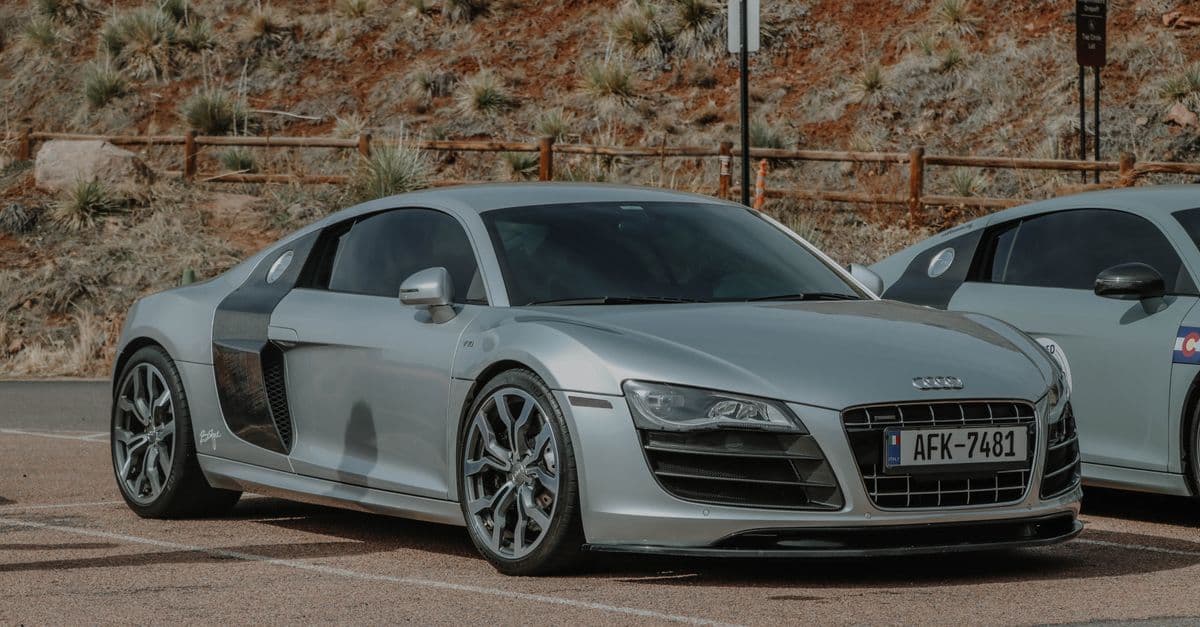
This is a condition check for one used car. It is informational buyer guidance, not an appraisal, investment or financial advice, or an offer to buy or sell a vehicle. The photograph shows an illustrative R8. It does not show the candidate car or prove its suspension condition.
Contents 7 sections
First, identify the suspension
Start with the full vehicle identification number (VIN), model year, generation, and market. Ask the seller for the original equipment record and a clear photo of each damper. Have an Audi dealer or R8 specialist match the equipment record and installed parts to the VIN. A listing phrase such as “sport suspension” is too vague to settle the question.
The first-generation Type 42 and second-generation Type 4S did not have one universal suspension specification. Audi's 2014 R8/Spyder specification book lists standard and Audi Magnetic Ride suspension variants. Audi of America's 2017 R8 training document describes electronic damper control, the control module, adjustment valves, and level sensors. It lists electronic damper control on the V10 and sports suspension on the V10 plus. Audi's later Germany-market information says Magnetic Ride was available on request for both refreshed variants. These are different model years and markets. Use them to identify what to ask for. The build record for the exact car settles what it left the factory with.
An installed damper can differ from the factory record. A past owner may have replaced an adaptive unit or fitted a passive suspension. If the seller says the system was converted, request the parts invoice and a current scan. Ask the shop how it handled the electronic system. Ask the inspector to confirm what is actually installed at every corner. Do not infer a complete conversion from one photograph or a dashboard with no warning.
Audi USA's service page lets owners retrieve model-specific maintenance information and manuals by VIN or vehicle details. It is a starting point for the correct car. It is not a record of work done to that car. For completed work, match dated, mileage-stamped invoices to the VIN and the installed parts.
Look at all four dampers
Book an independent inspection with a shop that works on the same R8 generation. Ask for the car on a lift. The inspector should photograph each damper body and the area below it, then describe any wet oil, residue, damage, or replaced parts by corner. “Suspension checked” on a summary sheet gives you little to price. You need a finding that names the corner and the condition.
Oil on a damper deserves a diagnosis. Road dirt can collect on a wet surface, while a dirty but dry body may have another explanation. The inspector can clean an uncertain area and recheck it using the correct shop procedure. A photograph alone cannot tell you whether fluid came from the damper, a nearby component, or an old spill. Ask the shop to state what it saw and how it identified the source.
Ask the inspector to check mounts, bushings, tire wear, and other suspension parts at the same time. A knock over a bump is a symptom, not the name of a failed part. The R8 has more than one component that can make noise or change how it rides. Separate a diagnosed damper leak from a worn mount or an electrical fault before you approve a price adjustment.
Do not use mileage as a substitute for this inspection. A low-mileage car can still show a wet damper. A higher-mileage car can have documented replacement work. The useful evidence is today's condition plus the dated repair file. Our R8 reliability guide covers the rest of the car; this check stays on the suspension.
Scan and drive the car
The damping system includes a control module, valves, and sensors, according to Audi's second-generation technical document. Ask for a scan that reads the relevant suspension control system, including current and stored faults. Keep the report with the inspection. A generic engine-code scan may leave that system unexamined.
Have the specialist test the car in the modes supported by this exact specification. Record any suspension warning, repeated knock, unstable behavior, or change in ride quality. Compare the road test with the lift and scan findings. A mode button that lights up does not prove all four dampers are healthy. A firm ride alone does not identify a bad damper; tires, settings, road surface, and other suspension parts affect what you feel.
If a warning appears, ask the shop to diagnose the cause before a test drive continues. If the car does not feel safe, stop the road test. A stored code can point the technician toward a circuit or corner. It cannot, on its own, prove that a damper has leaked. Likewise, a clean scan does not erase visible wet oil. Keep the physical and electronic findings side by side.
The Federal Trade Commission's used-car guidance recommends an independent mechanical inspection and explains that a vehicle history report does not replace one. Choose the inspector yourself and receive the full report directly. An agreed inspection scope is only the request. The completed lift, scan, and road-test findings are the evidence.
Put the evidence in one sheet
Use this table when you request the inspection. Record the shop's finding, invoice date, or open question for each item in your own notes. The last column tells you what to request when evidence is incomplete.
| Item | Evidence to collect | What it answers | If it is missing or disputed |
|---|---|---|---|
| Factory specification | VIN-linked build record and model year | Was Magnetic Ride fitted when new? | Ask an Audi dealer or R8 specialist to confirm the equipment. |
| Installed hardware | Photos and part identification at all four corners | What is on the car now? | Have the inspector identify every corner on a lift. |
| Physical condition | Corner-by-corner damper photos and written findings | Is there wet oil, damage, or another visible fault? | Request a source diagnosis before pricing a repair. |
| Electronic condition | Full suspension-system scan with stored and current faults | Is the control system reporting a problem? | Complete the scan; do not treat a clear dashboard as the answer. |
| Driving behavior | Safe road test with supported modes recorded | Does the car behave as the installed system should? | Leave the result unknown if the test cannot be completed. |
| Repair history | Dated invoices with VIN, mileage, parts, and shop | Which work was done, and to which corner? | Treat claimed work as unverified until the invoice arrives. |
The table is a request sheet, not a pass certificate. A clean row means only that one question has an answer. For example, an invoice for a right-front damper does not clear a wet left-rear damper. A scan with no stored fault does not clear a fresh fluid leak. Ask the inspector to write a separate conclusion for every open finding.
One 2014 R8 on the grid
Consider a hypothetical 2014 R8 V10. The seller says its Magnetic Ride “was done.” The file contains a dated invoice for one front damper. The rear-left damper looks wet in a seller photograph. No VIN-linked equipment record or suspension scan has been sent. These are made-up inputs to show the method; they describe no actual listing or repair result.
First, confirm the factory equipment and installed parts. The 2014 specification book shows both standard and Magnetic Ride variants, so the model year alone cannot answer that question. Next, ask the inspector to identify the fluid source at the rear-left corner. Keep the front invoice in the record, but apply it only to the corner and work it names. Then obtain the scan and a safe road test. The seller's broad claim still has three open parts: equipment, the rear-left condition, and electronic behavior.
If the inspector diagnoses a leaking rear-left damper, request a written repair option for this exact car. Ask whether the quote includes parts, labor, alignment, and any related work the shop says is necessary. We have no quote for this hypothetical car, so there is no honest repair price to put here. If the inspector finds the oil came from elsewhere, use that diagnosis instead. The point is to buy the car the evidence describes, not the one the listing sentence suggests.
Price the diagnosed work
Set a walk price after the inspection. Start with completed sales for cars that match the R8's generation, engine, gearbox, body style, condition, and market. Record each sale date and the number of comparable sales behind the range. An active listing is an asking price; it does not establish what a buyer paid. The R8 V10 market page can provide model context, but check its comparable count and whether its group matches this exact car.
Subtract a written repair quote and any other confirmed work from the amount you would otherwise pay. If the repair is still undiagnosed, do not invent a number. Pause until the shop can give you a scope and quote, or choose a walk price that reflects your own tolerance for the unknown. The cheap R8 buyer guide covers the wider price and title checks; a low asking price does not close an open suspension finding.
A seller may offer to repair the car before delivery. Ask who will perform the work, what parts they will use, which corners they will address, and what proof you will receive. Inspect the completed work before you release the money. If the seller instead offers a discount, compare it with the specialist's actual quote. A discount without a diagnosis can leave you holding the unknown.
Deal, Check, or Walk on this R8
| Call | When it fits |
|---|---|
| Deal | The VIN and installed suspension match the records. The lift, scan, and safe road test are complete. Any diagnosed work is in the walk price. |
| Check | A damper is wet, a code needs diagnosis, a conversion is undocumented, or one part of the inspection is unfinished. Pause the deposit and close the named gap. |
| Walk | The seller blocks an independent lift inspection or diagnostic scan. A hidden material suspension change or unresolved safety concern also stops the purchase. |
Bring the completed inspection and written repair scope to the price discussion. Then run a free Value Check on the exact listing before you send a deposit. Its estimate is informational; read its range and comparable count before using it.
Sources checked September 23, 2026: